Transportation has become one of the largest and least controllable expenses in the supply chain. At the same time, rising fuel prices, increasing delivery volumes, and growing customer expectations continue to place pressure on businesses to improve service levels while controlling logistics costs. As a result, organizations are expected to deliver faster and more efficiently without significantly increasing transportation spending.
Despite these challenges, many organizations still rely on manual route planning, dispatcher experience, and static delivery schedules. While this approach may work for smaller operations, it becomes increasingly difficult to sustain as delivery networks expand and operational complexity grows. Consequently, businesses often experience unnecessary mileage, underutilized vehicles, delivery delays, and higher transportation costs. In turn, these inefficiencies reduce productivity, increase operating expenses, and negatively impact customer satisfaction.
To overcome these operational challenges, businesses are increasingly adopting route optimization as a strategic capability rather than merely an operational convenience. Rather than expanding their fleet or hiring additional drivers to meet growing demand, organizations can maximize the efficiency of their existing transportation resources.
Furthermore, route optimization enables businesses to make data-driven routing decisions by considering factors such as traffic conditions, delivery time windows, vehicle capacity, and route constraints. As a result, companies can improve delivery efficiency, optimize fleet utilization, reduce transportation costs, and enhance overall logistics performance. As one of the core capabilities of a modern Transportation Management System (TMS), it helps organizations improve delivery performance, reduce unnecessary travel, optimize fleet utilization, and maintain greater control over transportation spending. Ultimately, this allows businesses to build a more efficient, scalable, and cost-effective logistics operation.

How Route Optimization Improves Delivery Efficiency
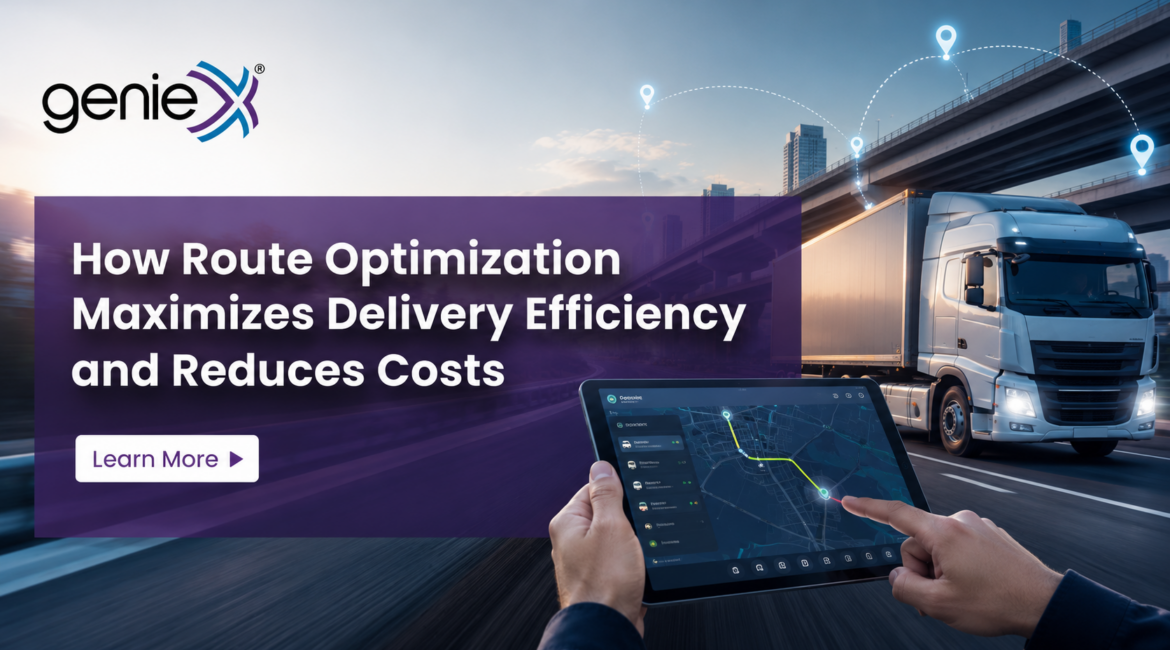
By utilizing AI and advanced algorithms to identify the most practical and economical routes based on traffic conditions, delivery windows, vehicle capacity, customer locations, and service areas, route optimization increases delivery efficiency. This allows businesses to complete more deliveries per trip, improve fleet utilization, and minimize delays.
Unlike traditional route planning, which focuses primarily on distance, modern route optimization software continuously adapts to changing operating conditions to maximize delivery productivity. Rather than relying on fixed routes, it dynamically evaluates factors such as traffic conditions, delivery time windows, vehicle capacity, and route constraints to determine the most efficient delivery plan. Consequently, businesses can make more informed, data-driven routing decisions. As a result, organizations improve delivery efficiency, reduce operational costs, optimize fleet utilization, and respond more effectively to evolving logistics demands.
For businesses, this translates into several operational advantages:
More Deliveries Per Vehicle
Intelligent route sequencing reduces unnecessary travel time and eliminates inefficient backtracking. This allows organizations to increase delivery volumes without proportionately increasing fleet size or labor costs.
In fact, the impact can be significant. For example, a recent Business Insider feature highlighted how AI-powered route optimization enabled logistics providers to reduce the number of routes required while maintaining delivery volumes. As a result, businesses were able to unlock additional capacity from their existing resources without expanding their fleet. This demonstrates that smarter route planning not only improves operational efficiency but also helps reduce transportation costs while supporting business growth.
Higher Fleet Utilization
Route optimization improves vehicle loading and delivery allocation, ensuring available assets are utilized more effectively across the network.
Based on a case study from Fynd, a leading furniture manufacturer achieved more than 75% fleet capacity utilization, allowing the company to improve delivery productivity while reducing transportation costs.
More Reliable Delivery Performance
Traffic-aware routing continuously adjusts routes based on congestion, road conditions, and delivery constraints, helping businesses maintain more accurate delivery schedules and improve customer satisfaction.
Faster Response to Disruptions
Unexpected road closures, order cancellations, and delivery changes are inevitable in logistics operations. AI-powered route optimization allows dispatch teams to dynamically reassign deliveries and update routes with minimal operational disruption.
For businesses operating across Metro Manila and other highly congested urban centers, these improvements can create a significant competitive advantage.
How Can Companies Reduce Logistics and Transportation Costs?
Companies reduce logistics and transportation costs by minimizing unnecessary mileage, lowering fuel consumption, improving fleet utilization, and reducing overtime expenses through optimized route planning.
Route optimization helps businesses remove hidden expenses that are frequently overlooked in daily operations by increasing the effectiveness of each kilometer traveled.
Lower Fuel Consumption
Reducing unnecessary mileage, idling, and backtracking directly lowers fuel spend across the fleet.
Industry research continues to show that route planning and vehicle optimization remain among the most effective levers for controlling transportation costs and fuel consumption.
Reduced Labor and Overtime Costs
Balanced route allocation allows drivers to complete deliveries within regular shift hours, reducing overtime expenses while improving workforce productivity.
Improved Asset Utilization
Organizations can often support growing delivery volumes without immediately investing in additional vehicles, drivers, or third-party logistics providers.
Lower Vehicle Maintenance Costs
Fewer kilometers traveled and reduced idle time naturally result in less wear and tear on vehicles, helping extend maintenance intervals and improve asset lifespan.
How genieX Helps Businesses Optimize Transportation Operations
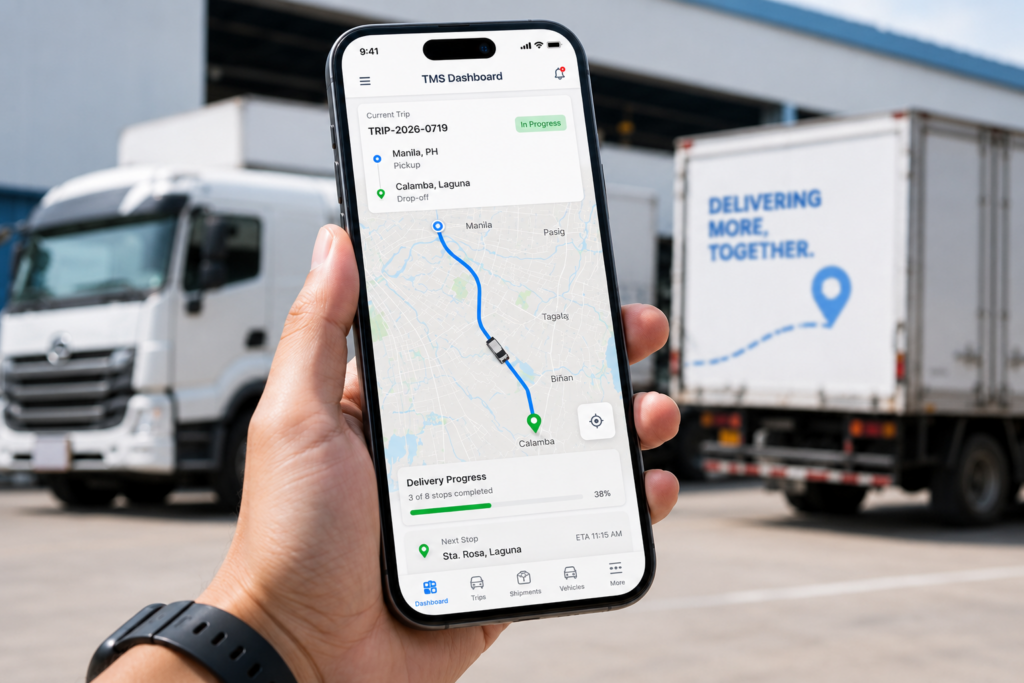
Through its partnership with Fynd, genieX provides businesses with an AI-powered Transportation Management System designed to improve efficiency while reducing transportation costs.
The platform helps organizations:
- Leverage AI-powered route optimization
- Improve delivery efficiency and fleet utilization
- Reduce transportation and fuel costs
- Gain real-time delivery visibility
- Scale alongside growing logistics requirements
- Benefit from local implementation expertise and support in the Philippines
For businesses operating across congested urban centers and geographically fragmented distribution networks, intelligent route optimization provides a practical way to improve service level.
Industries That Benefit from AI-Powered Route Optimization
AI-powered route optimization delivers measurable value across industries where transportation efficiency directly impacts operational performance, customer service, and profitability.
It is particularly beneficial for:
- Retail & Omnichannel Commerce – Improve store replenishment, last-mile delivery, and inventory availability while controlling transportation costs.
- Manufacturing & Distribution – Streamline inbound and outbound logistics to ensure reliable deliveries, maximize fleet utilization, and support production schedules.
- Fast-Moving Consumer Goods (FMCG) – Accelerate high-volume deliveries, maintain product availability, and respond quickly to changing customer demand through intelligent transportation planning.
- Logistics & Third-Party Logistics (3PL) – Optimize route planning, vehicle capacity, and delivery execution to improve service levels and operational efficiency.
Building a More Efficient Logistics Network
As transportation costs continue to rise, businesses can no longer rely on manual planning and dispatcher intuition to manage complex delivery operations. Improving transportation efficiency requires better visibility, smarter planning, and the right technology.
Route optimization helps organizations reduce transportation costs, maximize fleet utilization, and increase delivery capacity by selecting the most efficient routes. This allows businesses to improve service levels without adding more vehicles or increasing operational complexity.
Through its partnership with Fynd, genieX provides an AI-powered Transportation Management System (TMS) that combines intelligent route planning with real-time Track & Trace, API integration with ERP, WMS, and other business systems, and a secure cloud-based platform for centralized transportation management. With local implementation, training, and technical support in the Philippines, businesses can deploy the solution faster and ensure a smooth transition for their operations.
By combining genieX’s consulting-first approach with Fynd’s transportation technology, organizations gain greater visibility, better operational control, and the tools needed to improve delivery performance, reduce costs, and support long-term business growth.
How does route optimization improve logistics efficiency?
Route optimization is a capability of a modern Transportation Management System that enables organizations to plan the most efficient delivery routes based on variables like traffic conditions, delivery windows, vehicle capacity, and shipment priorities. By replacing manual dispatching with AI-driven optimization, businesses can reduce transportation costs, improve fleet utilization, increase on-time deliveries, and maximize the productivity of existing logistics assets.
How can a Transportation Management System reduce transportation costs?
As transportation expenses continue to rise due to fuel volatility, labor shortages, and increasing customer expectations, businesses require greater control over their logistics operations. A Transportation Management System (TMS) helps reduce transportation costs by automating shipment planning, optimizing routes, improving load utilization, and minimizing empty miles. These capabilities enable organizations to improve operational efficiency, make data-driven transportation decisions, and achieve measurable cost savings without compromising service quality.
How does AI-powered Transportation Management improve supply chain performance?
AI-powered Transportation Management Systems transform transportation planning by analyzing operational data in real time to recommend the most efficient routes, dispatch schedules, and vehicle assignments. This enables organizations to respond faster to changing business conditions, improve supply chain visibility, optimize fleet performance, and make informed decisions based on actionable insights.
How can businesses increase delivery capacity without expanding their fleet?
Increasing delivery capacity does not always require additional vehicles or higher capital investment. By leveraging an intelligent Transportation Management System, organizations can optimize route planning, improve vehicle utilization, consolidate shipments, and reduce unproductive travel. These efficiencies enable businesses to transport more goods using existing transportation assets, improving operational scalability while maintaining cost discipline and service excellence.
Why should businesses invest in a Transportation Management System as transportation costs continue to rise?
Transportation has evolved from a back-office function into a strategic component of supply chain performance. As logistics costs, customer expectations, and operational complexity continue to increase, investing in a modern Transportation Management System provides the visibility, automation, and intelligence needed to remain competitive.
About genieX
genieX provides end-to-end retail and supply chain technology solutions, headquartered in the Philippines and supported by global partners. Through a consulting-first approach, genieX helps businesses redesign processes and integrate advanced technologies. From forecasting and demand planning, through warehouse and transport management systems, to retail POS systems, genieX enables organizations to make data-driven decisions, optimize operational performance, and support long-term business growth.