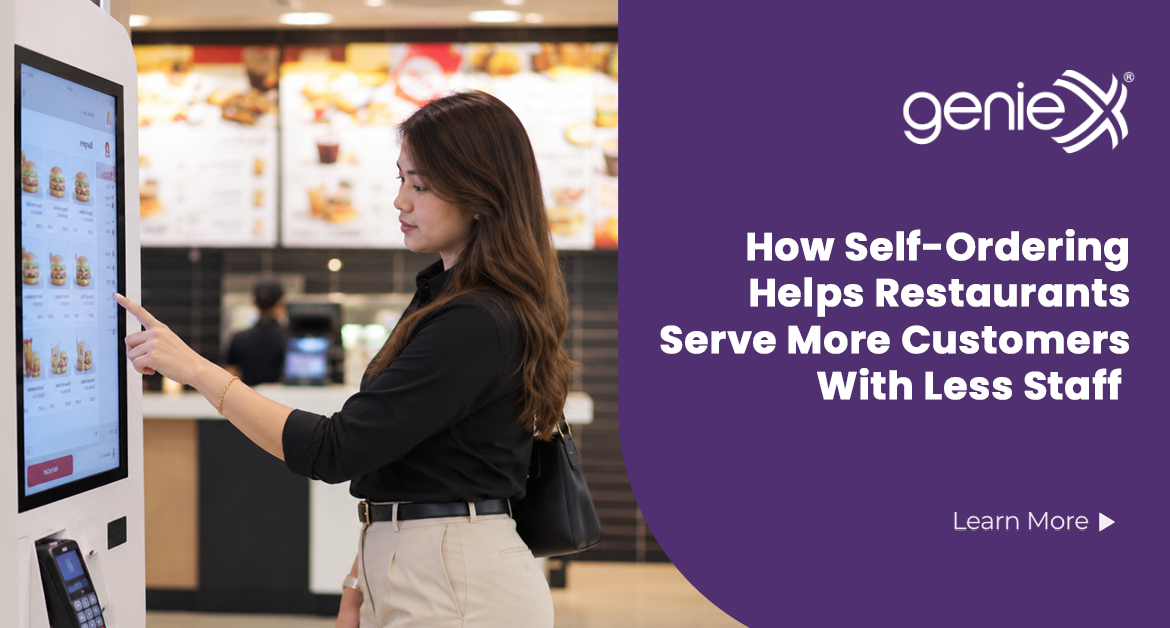
Peak hours put restaurants under pressure. Growing customer volume forces staff to juggle orders, inquiries, payments, and kitchen coordination while maintaining fast, smooth service.
For restaurants with limited front-of-house capacity, this can create a bottleneck. Queue lines grow, staff face order overload, and scaling headcount isn’t always practical for fluctuating daily customer traffic.
Self-ordering provides another way to increase ordering capacity. Digital ordering channels remove manual bottlenecks, freeing up restaurant capacity and smoothing out service during peak rush hours. This does not necessarily mean operating with fewer employees. Instead, self-ordering can help restaurants handle higher customer volumes without requiring a proportional increase in front-of-house staff.
How Does Self-Ordering Help Restaurants Serve More Customers?
Reduce Manual Order-Taking
When customers enter their own orders, employees do not need to manually encode every item, customization, add-on, or special request. This reduces repetitive front-of-house work and frees staff to focus on assisting customers, managing dining areas, preparing orders, and handling exceptions.
The goal is not necessarily to eliminate restaurant staff. Instead, self-ordering helps reduce the amount of staff time spent on repetitive transactions so the existing team can support higher order volumes.
Increase Ordering Capacity During Peak Hours
Self-ordering creates additional ways for customers to place orders without directing everyone through the same cashier or service point. Multiple customers can browse menus and submit orders through digital channels at the same time.
This extra capacity lets restaurants handle peak lunch, dinner, and weekend rushes without needing constant manual order-taking.
Make Ordering More Efficient
Self-ordering simplifies the ordering process by allowing customers to browse the menu, select items, customize their orders, and submit them directly through a digital ordering channel. This reduces the need for staff to handle every step manually, particularly when several customers are ordering at the same time.
Because customers can complete their orders independently, staff can spend less time going back and forth between customers and the ordering counter. This helps keep the ordering process moving, especially during busy periods when even small delays can contribute to longer queues.
Self-Ordering Channels for Different Restaurant Operations
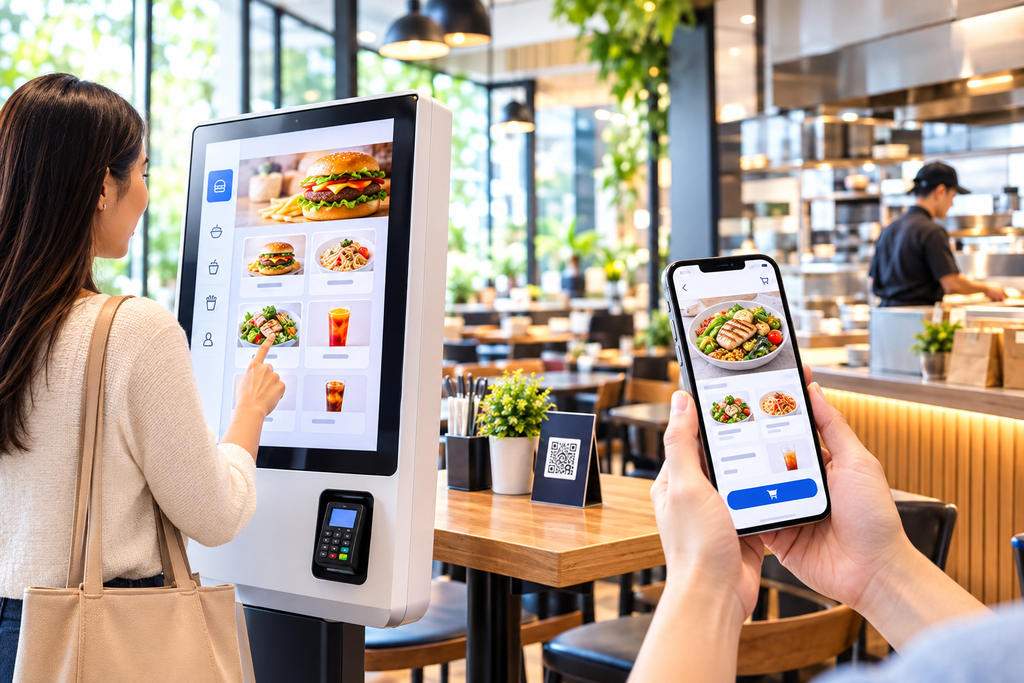
Restaurants can offer self-ordering through different digital touchpoints depending on their format, customer flow, and service model.
In-Store Self-Service Kiosks
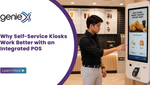
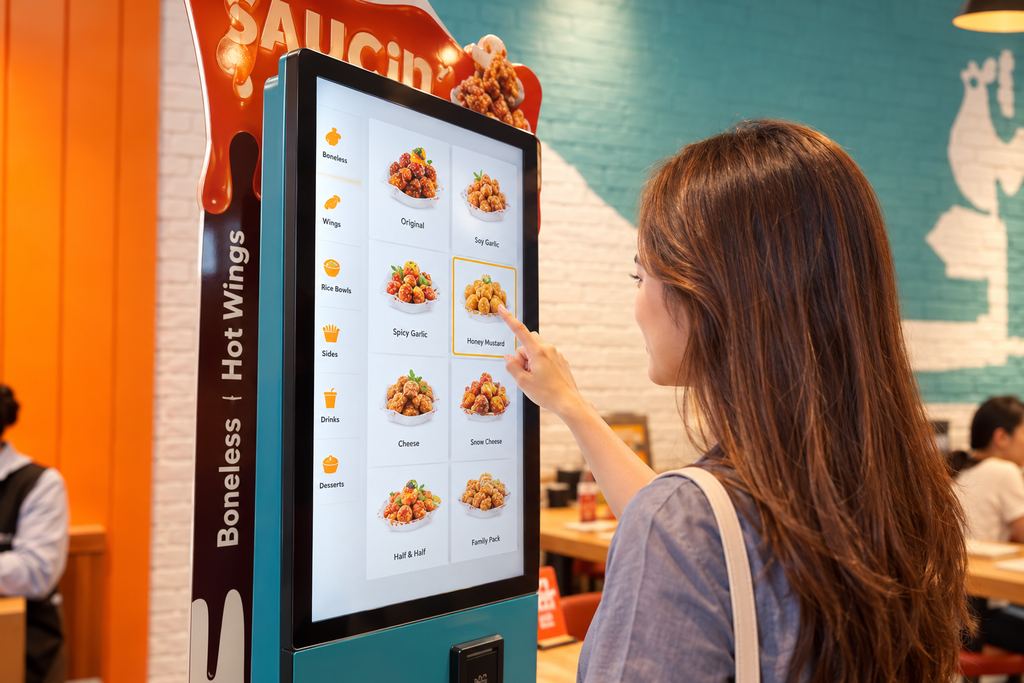
A self-service kiosk allows customers to browse the menu, customize meals, add items, and place orders independently. For quick-service restaurants and other high-volume locations, kiosks provide additional ordering points that can reduce reliance on traditional cashier queues.
Mobile App Ordering
Mobile app ordering allows customers to browse menus and place orders through their mobile devices. Customers can order before arriving or while inside the restaurant, giving restaurants another channel for managing pickup and other digital ordering workflows.
QR Table Ordering
QR table ordering allows dine-in customers to scan a QR code, access the digital menu, customize their selections, and place orders directly from their table. This reduces the need for staff to repeatedly visit tables to take orders and makes ordering or reordering more convenient.
How genieX Helps Restaurants Build Self-Ordering Operations
Self-ordering gives restaurants another way to handle customer demand without making staff responsible for every transaction. By moving routine ordering to digital channels, restaurants can create more capacity during busy periods while allowing employees to focus on service and other operational tasks.
Through menuX, genieX provides self-ordering solutions that support in-store kiosks, mobile app ordering, and QR table ordering, giving restaurants multiple ways to offer digital ordering based on their customer flow and service model.
menuX also supports integrations with POS, kitchen display systems, and digital menu boards, helping restaurants incorporate self-ordering into their existing operations.
With the right self-ordering setup, restaurants can increase their ordering capacity while making better use of their existing workforce. This creates a more flexible operation that can respond to peak demand without adding the same level of manual workload.
About genieX
genieX provides end-to-end retail and supply chain technology solutions, headquartered in the Philippines and supported by global partners. Through a consulting-first approach, genieX helps businesses redesign processes and integrate advanced technologies. From forecasting and demand planning, through warehouse management systems and transport management systems, to retail POS systems, genieX enables organizations to make data-driven decisions, optimize operational performance, and support long-term business growth.